Skip to content
GUAIX GROUP
UCM group of Extragalactic Astrophysics and Astronomical Instrumentation
GUAIX GROUP
  • Home
  • Science
    • Nearby galaxies with MEGARA
    • Distant galaxies
    • CATARSIS Survey
    • Dwarfs4MOSAIC La Palma ITP project
    • Astrostatistics
    • Galaxy Simulations
    • Cosmic magnetic fields
    • Dark Skies
      • Light pollution
      • SQM Network
      • TESS
      • Nixnox
      • Cities at Night
      • Street spectra
      • ASTMON-UCM
      • AZOTEA
      • RGB photometry
      • Papers
      • Posters
  • Instrumentation
    • MEGARA
    • TARSIS
    • EMIR
    • FRIDA
    • MOSAIC
    • LICA
    • Photometers
    • AtLAST
  • News
  • About Us
    • Historial científico del Grupo GUAIX
    • Agradecimientos y afiliaciones
  • Home
  • Science
    • Nearby galaxies with MEGARA
    • Distant galaxies
    • CATARSIS Survey
    • Dwarfs4MOSAIC La Palma ITP project
    • Astrostatistics
    • Galaxy Simulations
    • Cosmic magnetic fields
    • Dark Skies
      • Light pollution
      • SQM Network
      • TESS
      • Nixnox
      • Cities at Night
      • Street spectra
      • ASTMON-UCM
      • AZOTEA
      • RGB photometry
      • Papers
      • Posters
  • Instrumentation
    • MEGARA
    • TARSIS
    • EMIR
    • FRIDA
    • MOSAIC
    • LICA
    • Photometers
    • AtLAST
  • News
  • About Us
    • Historial científico del Grupo GUAIX
    • Agradecimientos y afiliaciones

Category Archives: Latest Results

You are here:
  1. Home
  2. Category "Latest Results"

LoTSS DR3 RM Grid: Upcoming Release

Latest ResultsBy Shane O'Sullivan2026-04-16

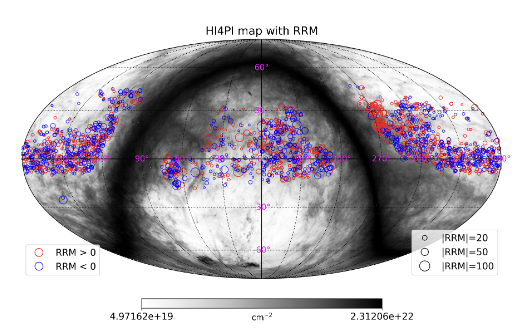
DR3 RM Grid in equatorial coordinates.

RM Grids with the Square Kilometre Array (SKA)

Latest ResultsBy Shane O'Sullivan2026-04-16

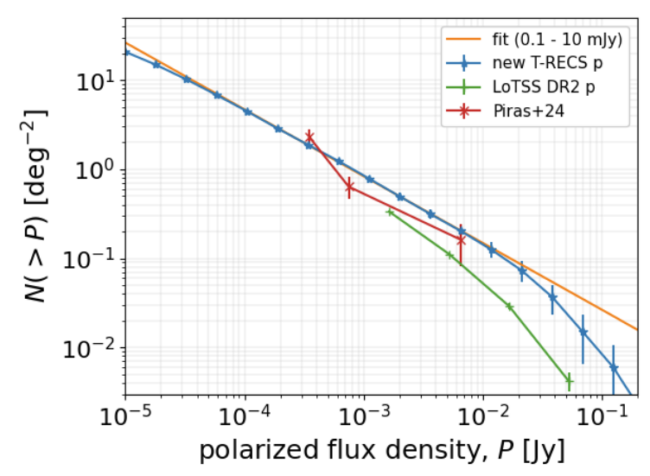
Predicted polarized source counts for SKA-Low as a function of sensitivity.
Magnetic Fields in the Shapley Supercluster Core (Alonso-López et al. 2026)

Latest ResultsBy Shane O'Sullivan2026-04-16

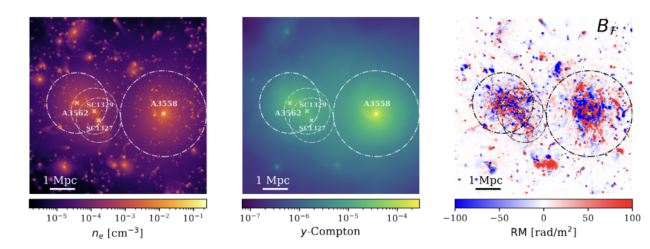
Using POSSUM rotation measures, we probe the magnetised environment of the Shapley Supercluster core and compare observations with cosmological simulations.

Go to Top