Research Assistant Position in Extragalactic Radio Astronomy
Applications are invited for a full-time Research Assistant position in extragalactic radio astronomy at Universidad Complutense de Madrid.
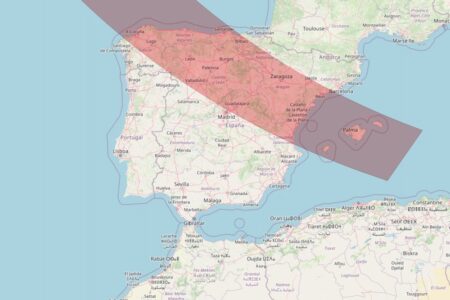
Jesús Gallego y Cristina Garay explican en el pódcast del Clúster del Espacio por qué la Península Ibérica se convertirá en un destino mundial para la observación astronómica La Península Ibérica se prepara para acoger uno de los acontecimientos astronómicos más relevantes de las próximas décadas: la observación de tres eclipses solares consecutivos en 2026,…
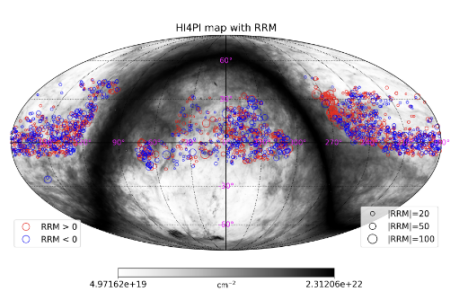
Using radio observations of thousands of distant quasars, we probe magnetic fields in the circumgalactic medium (CGM) of galaxies from z~0.4 to z~2.4.
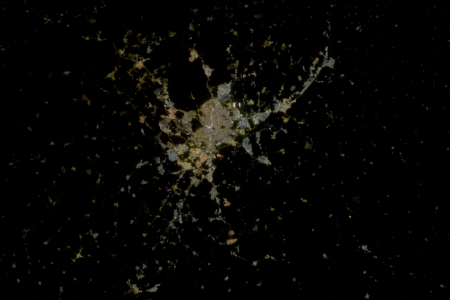
Lost at Night presenta una herramienta abierta para georreferenciar imágenes nocturnas de la Tierra tomadas por astronautas desde 2003 y convertirlas en datos científicos sobre contaminación lumínica, biodiversidad, salud, energía y desarrollo económico. Madrid, mayo de 2026. El próximo 21 de mayo de 2026 a las 12:00 h, hora peninsular española, se presentará en una…
El Laboratorio de Instrumentación Científica Avanzada (LICA), perteneciente a los Centros de Asistencia a la Investigación de la Universidad Complutense de Madrid (UCM), ha obtenido la certificación internacional ISO 9001:2015 en sistemas de gestión de la calidad. El certificado, emitido por SGS International Certification Services Ibérica, acredita que el laboratorio cumple con los exigentes requisitos…
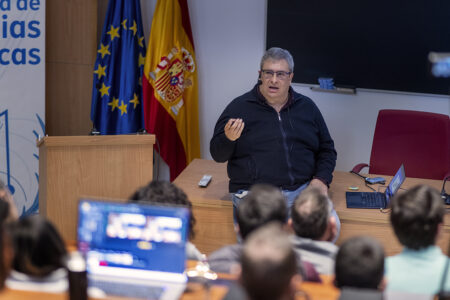
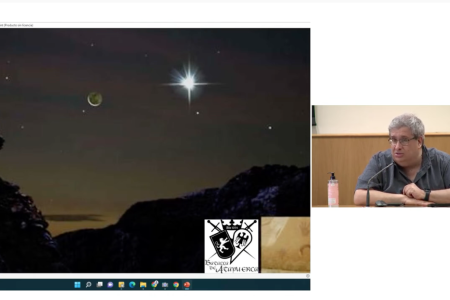
El profesor Jesús Gallego impartió el pasado 25 de marzo de 2026, dentro del ciclo de conferencias Hablemos de Física, una charla sobre el próximo eclipse solar que podrá disfrutarse en la península ibérica, al atardecer del 12 de agosto de 2026. Se trata de un fenómeno poco frecuente que ofrecerá una oportunidad única para…
Patricia Sánchez Blázquez, miembro del grupo GUAIX es la investigadora complutense más citada El ranking de investigadoras españolas y en España de abril de 2026, elaborado por el Cybermetrics Lab (CSIC), ha clasificado a más de 11.000 científicas basándose en perfiles públicos de Google Scholar y ORCID, prestando especial atención al índice h, de calidad, y el número…
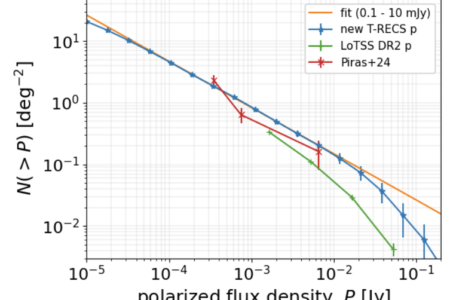
Predicted polarized source counts for SKA-Low as a function of sensitivity.
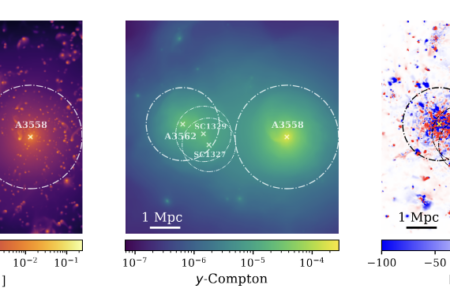
Using POSSUM rotation measures, we probe the magnetised environment of the Shapley Supercluster core and compare observations with cosmological simulations.
El eclipse de agosto de 2026: ciencia, historia y observación de un excepcional evento celeste visible desde la Península Ibérica La Facultad de Ciencias Físicas acoge una conferencia excepcional dedicada a uno de los fenómenos astronómicos más esperados de los últimos años: el eclipse total de Sol que tendrá lugar el 12 de agosto de…
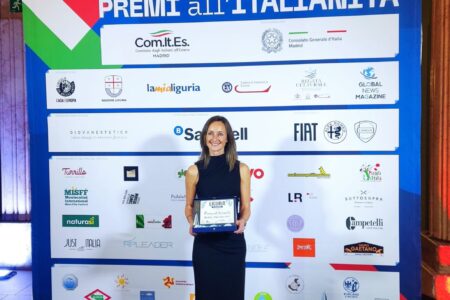
El 1 de diciembre de 2025, en el marco institucional del Círculo de Bellas Artes de Madrid, tuvo lugar la XIX Edición de los Premios a la Italianidad, uno de los eventos más prestigiosos dedicados a la puesta en valor de la excelencia italiana en territorio español. La velada contó con la participación de casi…
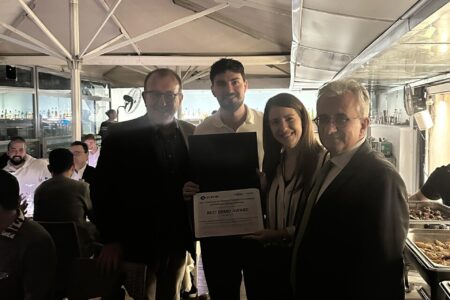
Investigadores del grupo GUAIX han recibido el premio a la Mejor Demostración en la 11th IEEE Conference on Network Functions Virtualization and Software-Defined Networking (IEEE NFV-SDN 2025), celebrada recientemente en Atenas, Grecia. La demo, titulada “Scalable and Distributed Processing of 3D Astronomical Data Cubes for Galaxy Evolution Studies Using the AC3 Framework”, fue presentada por Mario Chamorro-Cazorla y Cristina Catalán-Torrecilla (GUAIX-UCM/IPARCOS), en colaboración con Ray Carroll, Ben Capper y Ryan…
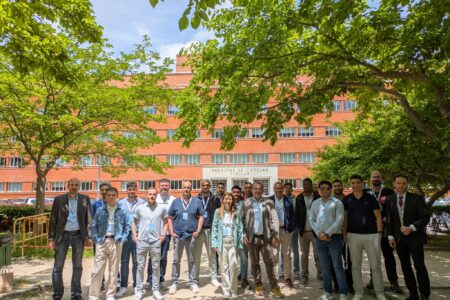
Los días 20 y 21 de mayo, la Facultad de Ciencias Físicas de la Universidad Complutense de Madrid acogió la quinta reunión plenaria del proyecto europeo AC3 (Agile and Cognitive Cloud-edge Continuum), reuniendo a todos los socios del consorcio para dos jornadas de trabajo, sesiones técnicas y planificación estratégica. Nuestro grupo de investigación, responsable del…

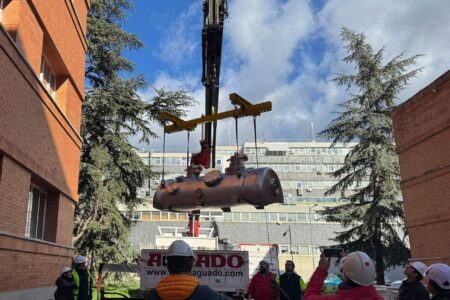
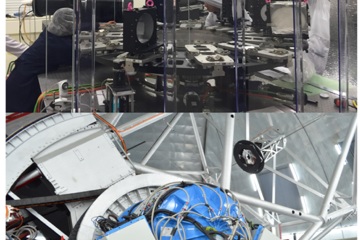
Madrid, 30 de enero de 2025 – Los días 29 y 30 de enero, la Universidad Complutense de Madrid (UCM) ha recibido el innovador instrumento SCORPIO, diseñado para el telescopio Gemini de la National Science Foundation (NSF) estadounidense. Esta es una iniciativa del Southwest Research Institute (Texas, EE.UU.) y su integración se llevará a cabo…
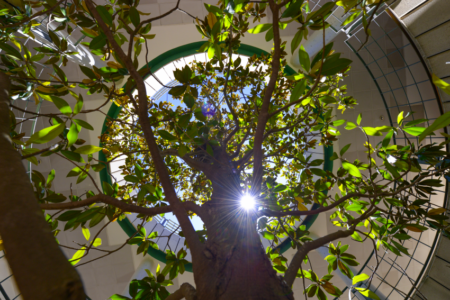
Maritza A. Lara-López (Investigadora Ramón y Cajal) y miembro del grupo GUAIX ha sido ganadora en la modalidad “Premio Patrimonio Arquitectónico” del concurso de fotografía “Fotografiarte” organizado por la UCM. La foto finalista, titulada “El círculo de la vida”, fue tomada en la entrada del jardín botánico en el campus de la Universidad. Las fotografías…
Click the link to access the program of the meeting. See you on the 17th!
En el Grupo de Investigación de Astrofísica Extragaláctica, no solo exploramos los misterios del universo, ¡también nos enfrentamos a desafíos terrenales! Parte de nuestro equipo de investigadores, que incluye estudiantes predoctorales, postdocs y profesores permanentes, ha decidido cambiar los telescopios por zapatillas deportivas y participar en emocionantes carreras de obstáculos como el Desafío de Guerreros y la Survivor…
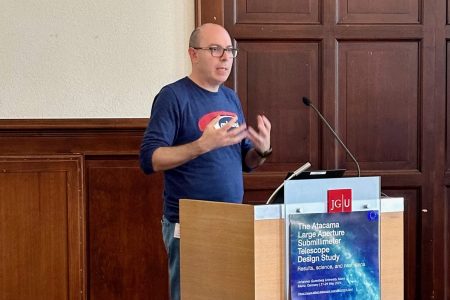
Last July, the European Commission gave the green light to the funding of the AtLAST2 project through the Horizon Europe program. The project called Consolidating Plans for the Atacama Large Aperture Submillimeter Telescope will begin its activities in early 2025. It is an ambitious project with the ultimate goal of launching the most powerful single-antenna…
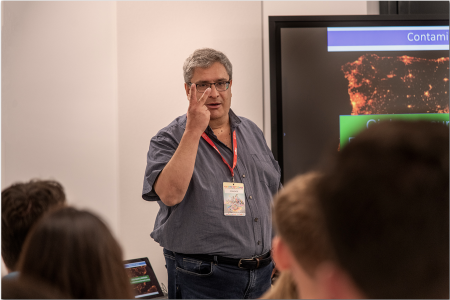
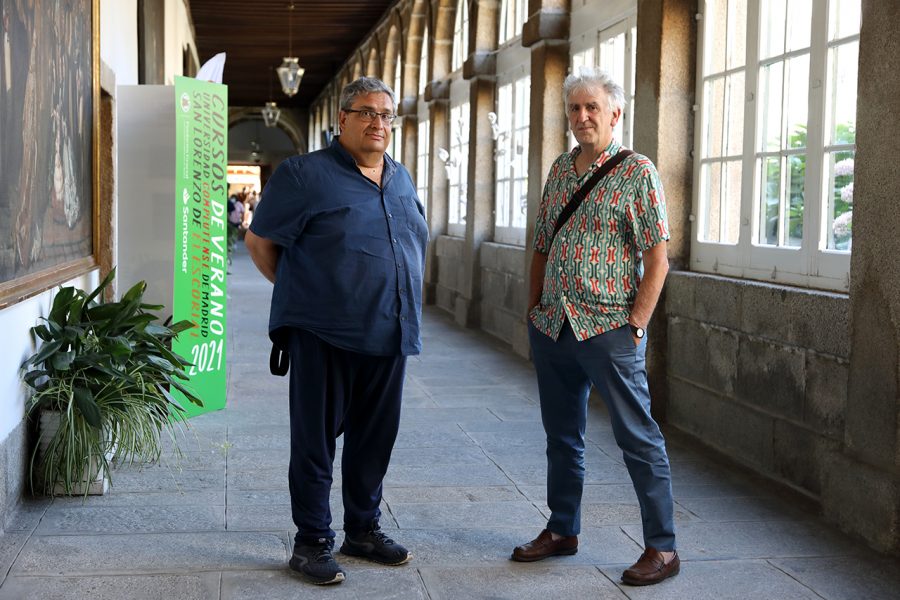
El catedrático del departamento de Física de la Tierra y Astrofísica de la Universidad Complutense, Jesús Gallego, ha cerrado el curso de verano “De Madrid al cielo: Talento e innovación para el espacio”, con una conferencia sobre la contaminación lumínica y la manera de luchar contra ella. Gallego, especializado en galaxias lejanas, lleva algunos años implicado en diferentes proyectos para…
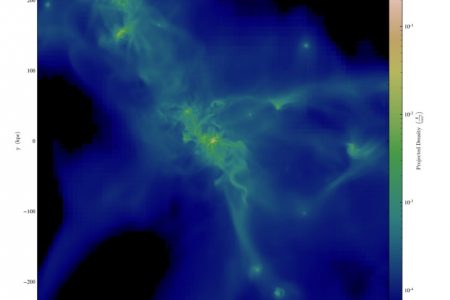
160 investigadores de 60 universidades presentan los resultados de su primer conjunto de simulaciones cosmológicas de la formación de una galaxia como la nuestra, la Vía Láctea, con el fin de avanzar hacia una teoría de la formación de las galaxias. El equipo de investigación ha revelado cómo la recuperación de las propiedades observadas del gas…
Con una resolución sin precedentes de 40 metros, el proyecto RALAN-Map EU está dirigido por el astrofísico de la Universidad Complutense de Madrid, Alejandro Sánchez de Miguel. Este mapa representa un avance significativo en el estudio de la contaminación lumínica, porque permite una evaluación más precisa de su impacto en el medio ambiente y en…
La Dra. Cristina Catalán Torrecilla, miembro del grupo GUAIX y responsable en la UCM del proyecto, participó el pasado 21 de junio de 2023 en la reunión inicial del proyecto Europeo AC3 (Agile and Cognitive Cloud edge Continuum management) que tuvo lugar en el EURECOM SophiaTech campus, en Sophia Antipolis, cerca de Niza (Francia). El…
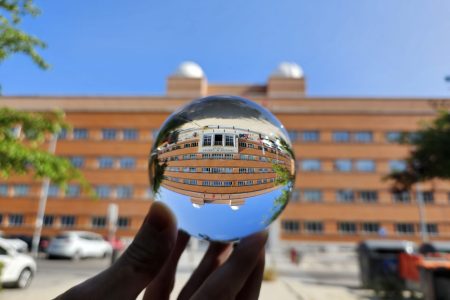
Maritza A. Lara-López (Investigadora Ramón y Cajal) ha sido finalista en el concurso de fotografía “Fotografiarte” organizado por la UCM. La foto finalista, titulada “Abriendo perspectivas desde la Facultad de Ciencias Físicas”, fue tomada a través de una esfera de cristal enfrente de la Facultad de Ciencias Físicas. Las fotografías ganadoras y finalistas estarán en…
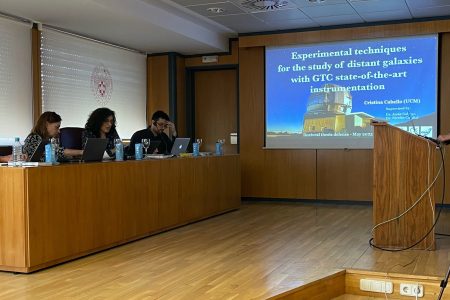
On May 25th 2023, Cristina Cabello has defended at the Complutense University of Madrid her PhD work entitled “Técnicas experimentales para el estudio de galaxias distantes con instrumentación puntera de GTC” (Experimental techniques for the study of distant galaxies with GTC state-of-the-art instrumentation) supervised by Drs. Jesús Gallego (UCM) and Nicolás Cardiel (UCM). Congratulations! As…
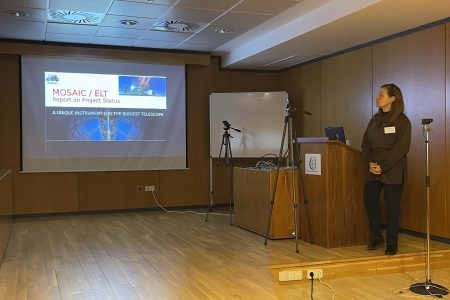
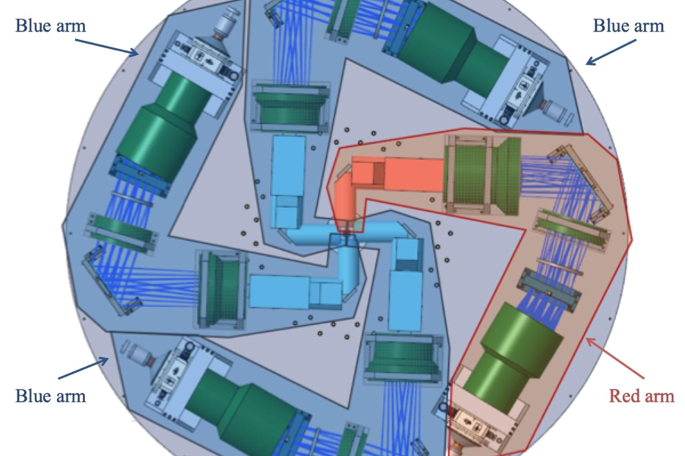
Last Monday 19th December 2022 the GUAIX group received the official visit of the Project Office of the MOSAIC project. The group of visitors included Roser Pelló, Principal Investigator of MOSAIC, Eric Prieto (MOSAIC Project Manager) and Laurent Martin (Work Package Manager of the infrared spectrographs), all of them from the Laboratoire d’Astrophysique de Marseille…
El grupo GUAIX participa en la Semana de la Ciencia y la Innovación 2022 con dos actividades dirigidas a todos los públicos. El martes 15 de noviembre tuvo lugar una charla coloquio titulada “Contribución española a MOSAIC, instrumento para el telescopio gigante ELT”, en la que se presentó la contribución de la UCM a este…
La investigadora del grupo GUAIX, María de los Ángeles Gómez Flechoso lidera el equipo de investigación de la misión ARRAKIHS en la Complutense, que estudiará la materia oscura existente en el Universo. La Agencia Europea del Espacio (ESA, por sus siglas en inglés), a través de su Comité de Política Científica, ha aprobado oficialmente la selección…
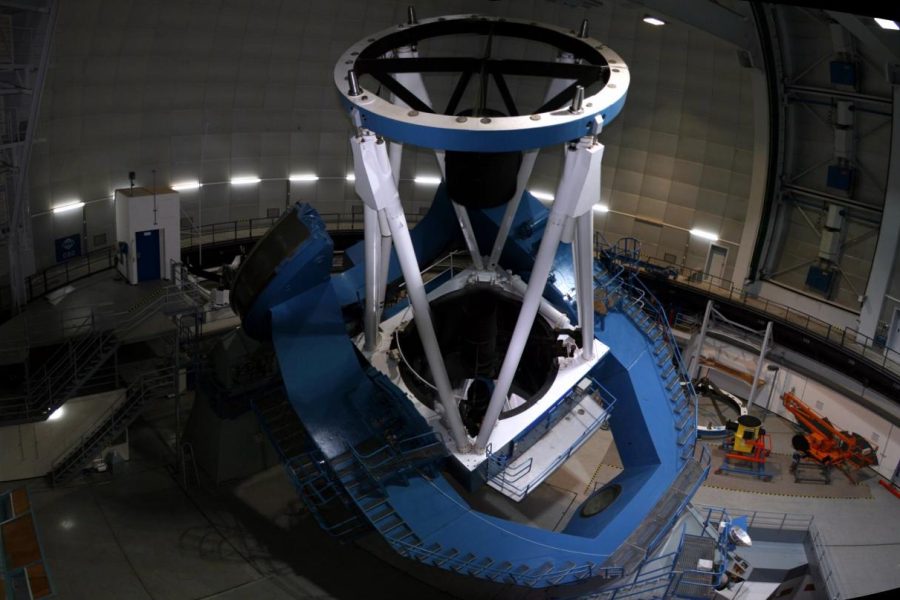
TARSIS is the next generation instrument for the Calar Alto 3.5 meter telescope and will be unique in its ability to detect light in the near ultraviolet and its unprecedented field of view. Armando Gil de Paz, co-principal investigator of the project at UCM, says that TARSIS will be a great challenge because it…
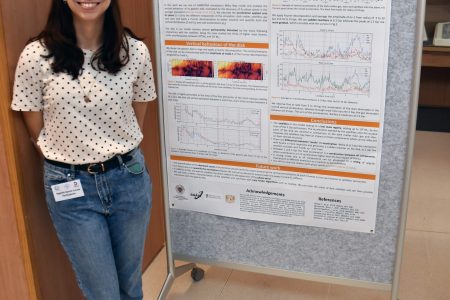
Begoña García-Conde Navarro, PhD student of the GUAIX group has won the second prize in the PhDay 2022 sessions that were held from 10 to 14 October at the UCM Physical Science Faculty. Begoña García-Conde presented the research she is performing for her PhD thesis, entitled “Vertical Accelerations in Cosmological Simulations of Milky Way…
UCM and IAA-CSIC co-lead TARSIS, the future instrument for the 3.5 m telescope at Calar Alto. TARSIS has unique characteristics, in particular its capacity to detect near ultraviolet light and its unprecedented field of view, along with an ambitious observational survey of galaxy clusters (CATARSIS) tailored to it. TARSIS and CATARSIS will maintain the largest…
Jesús Gallego, investigador del grupo GUAIX, ha participado en la mesa redonda: “La primera vuelta al mundo y sus avances científicos”. En ella, ha aportado su punto de vista desde el campo de la astronomía, puesto que la observación del cielo ha sido siempre muy importante para los navegantes “ya que ayuda a resolver lo…
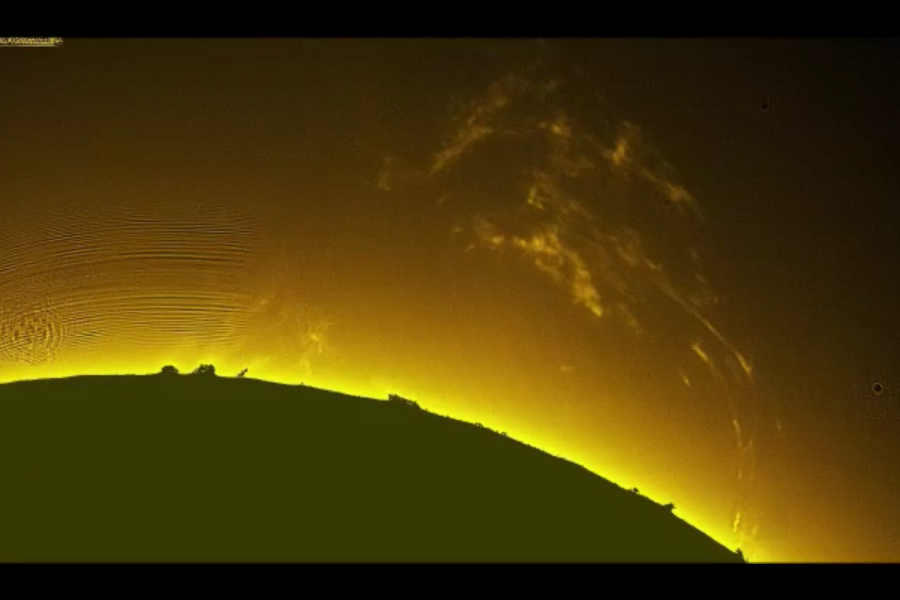
La mañana del 10 de mayo de 2022 se ha podido observar una gran prominencia solar. Durante 45 minutos, desde las 11.30 hasta las 12.15, se ha podido observar en el Sol una enorme prominencia en el limbo Suroeste que parecía estar a punto de entrar en erupción. Con el paso de los minutos se…
During the meeting on 2021, December 7, The ESO Council approved the MOSAIC construction agreement to be signed in March 2022 between ESO and CNRS (on behalf of MOSAIC). This is the green light for the MOSAIC preliminary design phase B until summer 2025.
Citizen science is a growing field that is generating new knowledge through the collaboration of citizens in scientific research. As this field expands it has started showing that it can be integrated into education in both formal and informal learning environments. In particular, the integration into education systems is creating new synergies as students acquire…
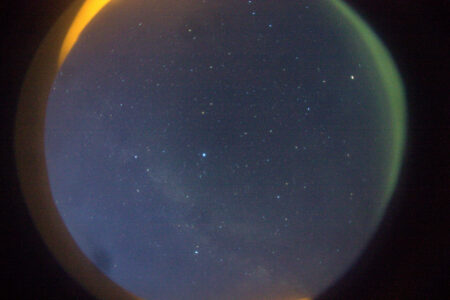
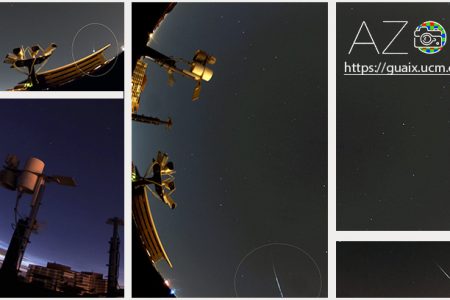
Imagine a movie that includes 50-100 pictures of the sky every single night. A snapshot of the sky brightness progress. That’s the idea behind the AZOTEA project The cameras of our collaborators monitor the night sky to serve our main research purpose: to study the light pollution evolution by measuring the brightness and color of…
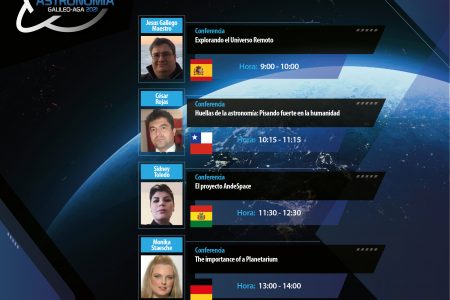
This invited talk was the one that opened the congress, that was held at the Universidad Galileo in Guatemala City. Jesús Gallego reviewed our conception of the cosmos, since the beginning of humanity, the firmament has always attracted us as something distant and unreachable. From the sphere of fixed stars in the book “Del saber…
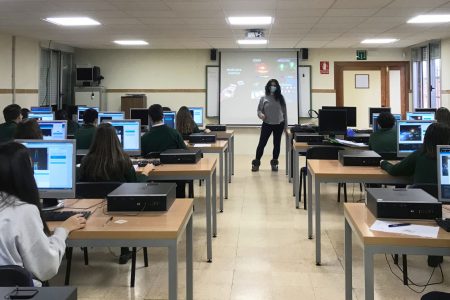
The efforts for spreading the Street Spectra project are more visible than ever. Thanks to the collaboration of the astronomy association “Astroguada” 8 schools have signed up to involve their students on the project. They gave us the opportunity of reaching all the students from ages 12 to 18. Each group got two different sessions…
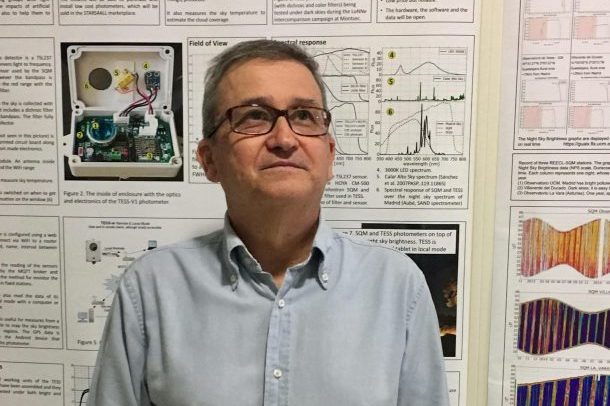
This award represents the highest honor that the International Dark-Sky Association (IDA) bestows upon individuals who, in the course of their lifetime, have contributed an extraordinary effort to light pollution abatement. Included in his many accomplishments, Jaime is a driving force of light pollution research in Europe with a clear focus on the promotion of…
A year and a half ago, Spain became one of the first countries to go into lockdown. A group of researchers from Universidad Complutense de Madrid, took this opportunity to study the variation of the brightness and color of the night sky in this period of time and used it to estimate the human contribution…
Text: Jaime Fernández, Photo: Alfredo Matilla Since the end of 2019, the Professor of Paleontology, Juan Luis Arsuaga, and the Professor of Astrophysics, Jesús Gallego, have been involved in a series of conferences (many of them online during the pandemic) in which they demand the need for a multidisciplinary discipline that investigates the origins of…
Up to 50cm (20 inches) of snow fell on the capital Madrid, last January the 8th & 9th. The record-breaking snowfall triggered some unprecedented scenes in Madrid. The low temperatures kept the snow and ice piled up across the capital for several days what triggered people to sky along Gran Vía street or had a…
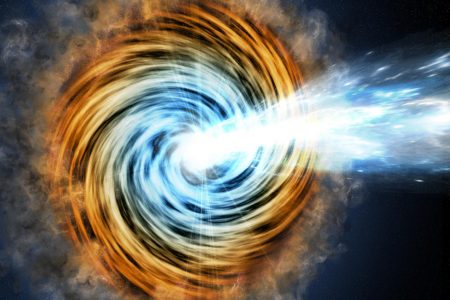
An international team of astronomers has identified one of the rarest known classes of gamma-ray emitting galaxies, called BL Lacertae, within the first 2 billion years of the age of the Universe. The team, that has used one of the largest optical telescope in the world, Gran Telescopio Canarias (GTC), located at the Observatorio del…
The Festival for Art, Technology and Society “Ars Electronica” is an internationally platform for digital art and media culture that enjoys a worldwide reputation. This year’s edition took place from September the 9th to the 13th, and for the first time, it happened not only in Linz, but at 120 locations around the globe. 6…
Citizen science engage students in meaningful science research that addresses real world issues and leads to scientific advancement. We would like to invite school students to contribute to one particular project. We intend to generate awareness about the problem of light pollution in general, and the consequences of the global switch out of the older…
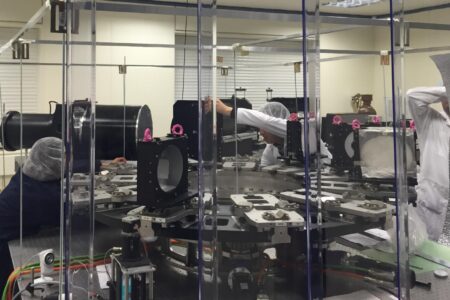
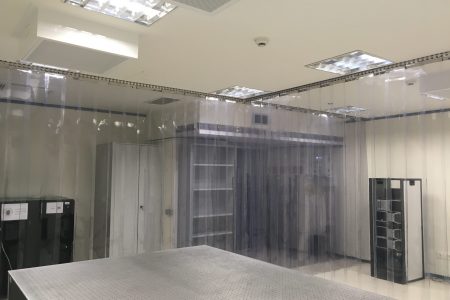
These days has finished the installation of a brand-new ISO7 clean room at our LICA laboratory. The new facility will allow the manipulation and characterization of high-tech devices that need such level of cleaning. Specifically, LICA is now fully qualified for the work with scientific-level detectors, optical components, and complex instrumental setups. The LICA clean…
Light pollution was believed could only be measured with photometers from the ground, but a new research published in Scientific Reports (Nature group) has proven that it is also detectable from space. Satellites detect diffused light in unlighted areas outside cities. Until now these detections were attributed to an instrumental effect but the study shows that this…
As millions across the globe are having to self-isolate to prevent the spread of coronavirus astronomical observation activities are reduced to those we can carry out from our home with instrumentation we happen to have with us. The lockdown is an exceptional opportunity to measure the effects of the decrease in human activity on the…
The III Congreso ProAm de la Sociedad Española de Astronomía was a meeting point between the community of professional astronomers and the very active community of astronomy enthusiasts in Spain.Our researchers have attended this conference in order to present Street Spectra with a poster describing the motivation being the change in technology lighting is suffering around the…
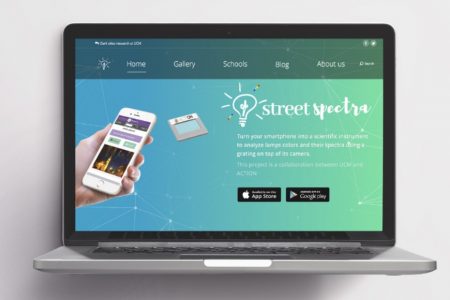
The ActiON pilot project Street Spectra has recently set up an ad hoc new website that serves as a resource for information related to the project. Explore https://streetspectra.actionproject.eu and browse through all the new interesting materials! The home screen offers links to the epicollect5 app from both the Apple store and Google play. It also…
The ActiON pilot project Street Spectra has recently set up an ad hoc new website that serves as a resource for information related to the project. https://streetspectra.actionproject.eu Explore the website and browse through all the new interesting materials! The home screen offers links to the epicollect5 app from both the Apple store and Google play.…
This didactic unit on the Cities at Night citizen science project aims to generate social awareness about the problem of light pollution, bring scientific research closer to schools and of course encourage young people to participate in the project. This teaching material will allow you to work in the classroom with high school students with…
The UB, IAUNAM and UCM co-organize the The Milky Way Gaia school on “Milky Way size galaxy formation and high performance computing” that is taking place between Jan. 14-17 2020 in Barcelona. The objective of the school and working group behind it is the exploitation of Gaia data in combination with other survey data to…
GUAIX member Cristina Cabello attended the J-PAS RIA Workshop: ‘The Universe in 56 colours: science with the first J-PAS data’ held in Teruel from 2 to 4 December, and gave a talk entitled Studying the properties of low-mass galaxies at z ∼1. How can J-PAS be useful here? This research surveys the Extended Groth Strip…
The regional government of the Comunidad de Madrid has awarded two research projects for Young Researchers to GUAIX members Dr. Bililign T. Dullo and Dr. Santi Roca-Fàbrega, both Captación de Talento fellows in the group. The amount awarded is over 90 k€ to support their research on the process that drive galaxy formation, from the…
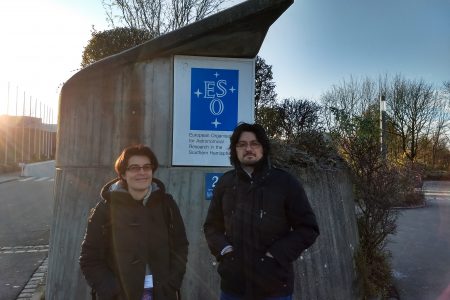
GUAIX member Dr. Sergio Pascual and Dr. Eva Besadas visited the European Southern Observatory (ESO) headquarters in Garching to attend the Instrument Control Systems Seminar for the Extremely Large Telescope (ELT). The participation in this seminar is a further step in the effort being made by the GUAIX group to be at the head of…
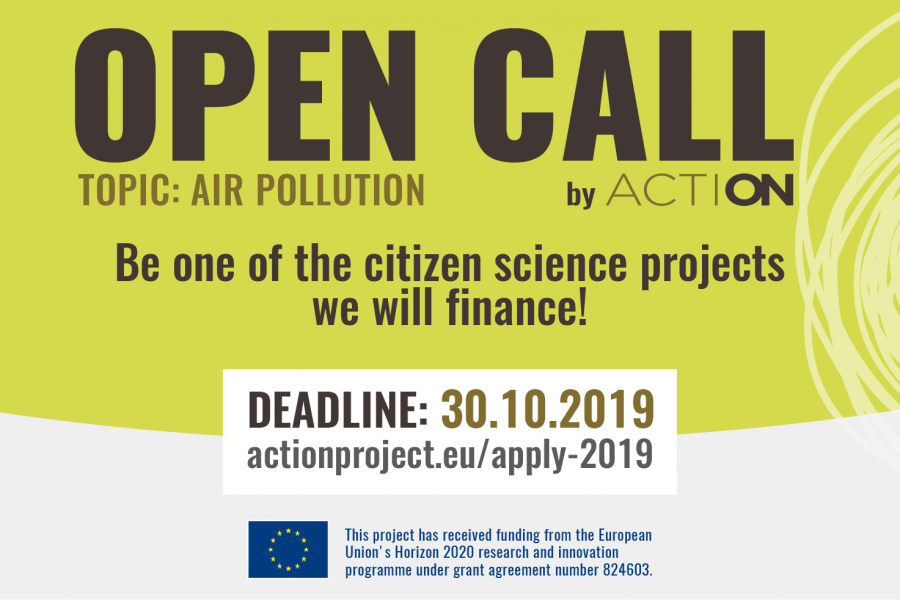
ACTION is looking for new and ongoing citizen science projects related to any form of pollution in Europe and worldwide. Successful applicants will receive €20,000 to help deliver a six-month pilot with the help of the ACTION team. The funding can be spent on salaries, equipment, consumables, travel, subcontracting to other entities, and indirect expenditure…
The researchers Sara Cazzoli and Laura Hermosa have visited this week the department of Earth Physics and Astrophysics, for a scientific collaboration involving IFU data from the new MEGARA instrument with professors Africa Castillo and Armando Gil de Paz. Dr. Sara Cazzoli is researcher at the IAA (Instituto de Astrofísica de Andalucía) and she was…
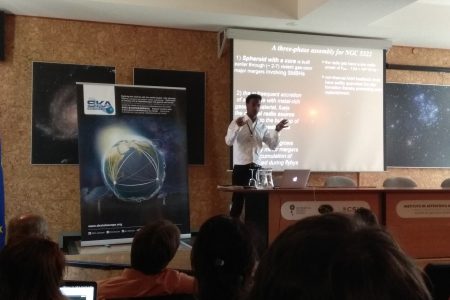
“The nuclear activity and central structure of the elliptical galaxy NGC 5322” Bil Dullo attended the ‘SKA in Spain’ meeting at Granada this week with a talk about “The nuclear activity and central structure of the elliptical galaxy NGC 5322”. His contribution showcased best strategies to exploit synergies from a large sample of high-resolution, multi-wavelength data, including from HST (optical and infrared) and…
Are you a researcher interested in carrying out your research in Madrid? The GUAIX Group is interested in supporting your application to the MSCA Individual Fellowships Calls. Our group can provide support in the preparation phase of the MSCA-IF grants. GUAIX coordinates the efforts and activities of UCM researchers in the following fields: Development and…
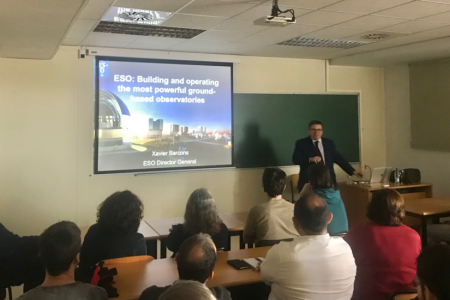
ESO Director General, Xavier Barcons visits the Faculty of Physical Sciences Xavier Barcons visited the Complutense University on Friday 5 April, invited by IPARCOS and he gave a talk, entitled ESO: Building and operating the most powerful ground-based telescopes. Barcons explained to a room full of researchers and students how is the day to day…
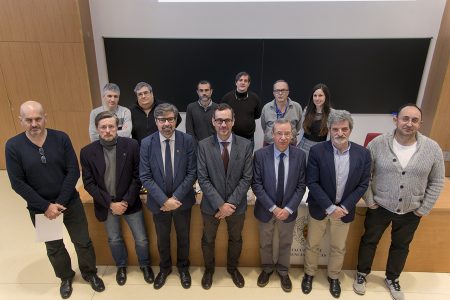
On January 21, the Faculty of Physics hosted the presentation day of IPARCOS (Instituto de Física de PARtículas y del COSmos), an institute that, according to its current director, Fernando Arqueros, “works in particle physics as well as astrophysics, cosmology and advanced instrumentation and applications”. The GUAIX Group is one of the five groups…
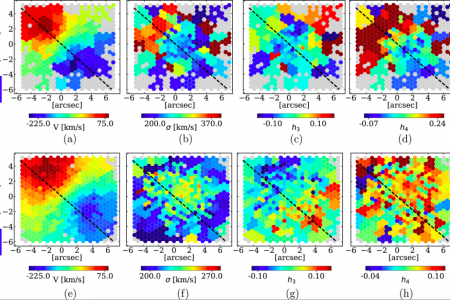
Dr. Bililign Dullo, member of the GUAIX group, in collaboration with other researchers of the group published in the prestigious journal ApJ an article about the spiral galaxy NGC 7025. Disky bulges in spiral galaxies are commonly thought to form out of disk materials (mainly) via bar-driven secular processes. They are structurally and dynamically…
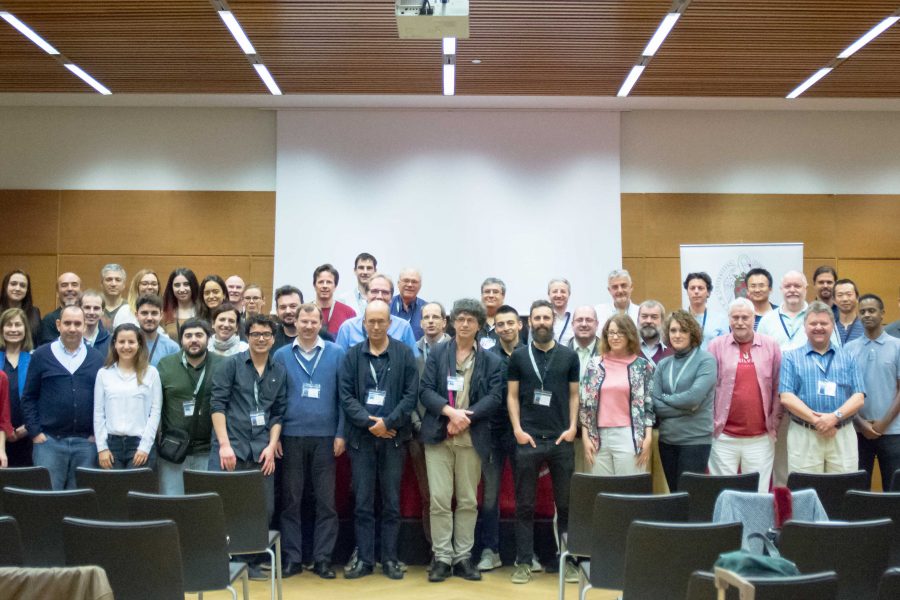
The international scientific colloquium “Spectroscopic Surveys with the ELT: A Gigantic Step into the Deep Universe” took place from 17 to 20 October 2017 at the Palacio de Congresos in Toledo (Spain). The meeting was organized by the Complutense University of Madrid (UCM) with the support of the Instituto de Astrofísica de Andalucía (IAA-CSIC) and…